

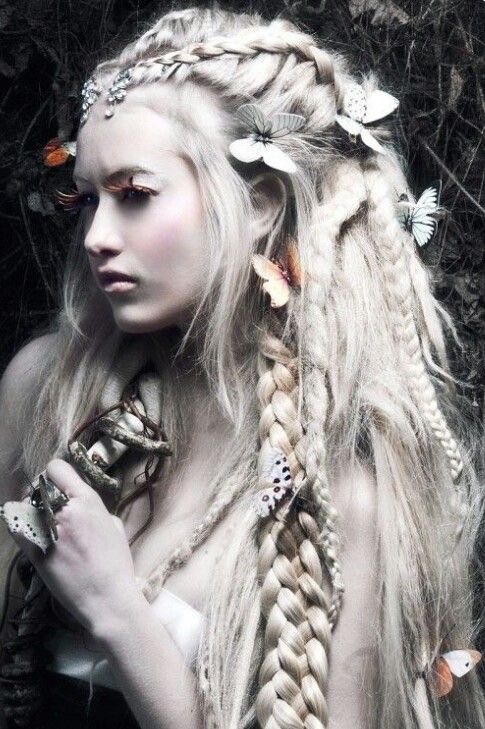
A samodiva (plural: samodivi) is a wood nymph from the Balkans, specifically in Bulgaria. Samodiva translates ‘samo’ (alone) and ‘diva’ (wild/divine). The first part of the name signifies avoidance of humans and the second part indicates the wild or divine nature.
These nymphs are forest spirits who appear as beautiful young women. But the Samodivi are harmful, mischievous, creatures in many stories.
There are various origins tales for the samodivi. One origin tale says they’re the daughters of Bendis, the Thracian goddess of the Moon and Hunt. A second origin tale says they’re offspring of the Lamia, an evil dragon creature in Bulgarian folklore. Still other stories claim they’re the spirits of wicked women who are stuck between heaven and hell.
The samodivi are always described as very beautiful women who never age. They often have long, blonde hair and bright blue eyes. They wear long, white gowns made of moon beams and rainbow-colored with a green belt. They wear wreaths of wild flowers on their heads.
The samodivi dwell in mountainous areas of the Pirin, Vitosha, Rila, and Stara Planina Mountains. They often ride deer using twisted snakes for reins. They’re very protective of the deer and cast a curse on anyone who killed the them, even by accident. The curse of the samodivi resulted in death of the slayer of the deer.
The samodivi are often portrayed as harmful to mortals. Although the samodivi dance when accompanied by the music of a shepherd’s pipe, they are known to seduce a shepherd to play for them. If an unfortunate mortal stumbles on the samodivi dancing, they’re enticed to join and no human can keep pace with them and dies from exhaustion.
In other tales, a mortal might temporarily best a samodivi. The nymph’s magic is entwined in their clothing, so when bathing, they are vulnerable. If their clothing is stolen, they are powerless.
Today, people living in remote villages of Bulgaria, still believe in the samodivi. The powers of the nymphs to inflict harm means are feared and respected.
In folklore, a samodiva can transform into any shape she desires but most common forms include a swan, snake, horse, and even a whirlwind. She may also appear as a beautiful woman, a swan-woman, or a woman with cloven hooves. The time to approach the samodivi is before dawn during a full moon.
 Leanbh Pearson