

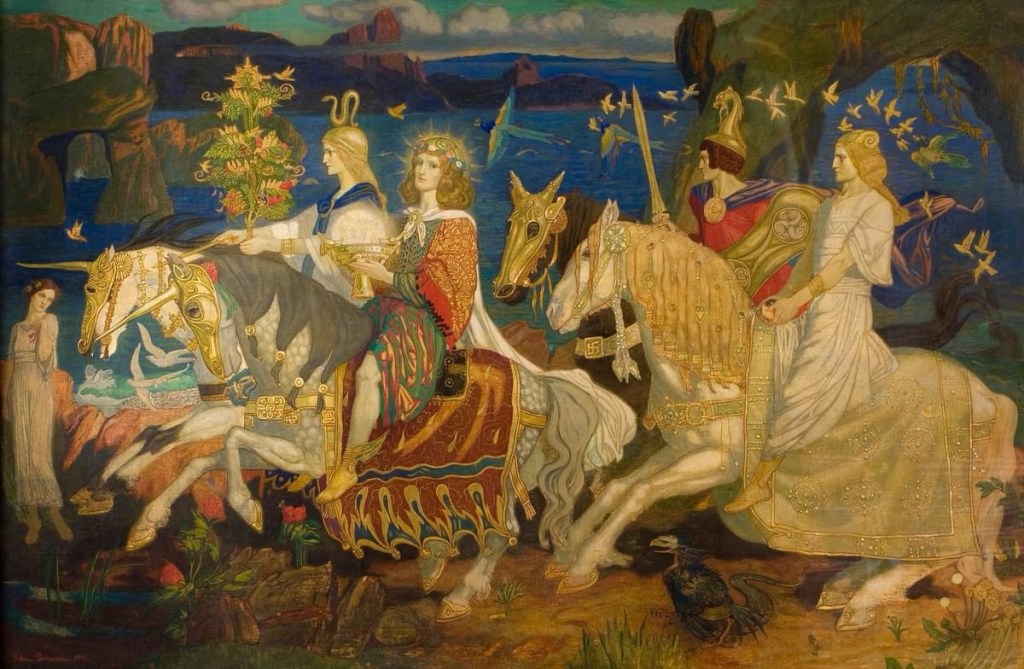
John Duncan’s Riders of the Sidhe (1911)
In the mythic Otherworld of Irish Gaelic folklore, the Tuatha Dé Danann are a powerful race, often described as semi-divine beings possessing extraordinary skills in magic and warfare. According to the tales and legends, they arrived in Ireland in a mist and introduced significant shift in culture and mystical knowledge. These gods and goddesses are frequently associated with be sídhe: prominent ancient burial mounds such as Brú na Bóinne, which are considered entrances to Otherworld realms.
The race of Otherworldly beings already occupying Ireland, were the powerful the Fomorians (Fomoire), who seem to represent the destructive powers of nature. As part of the long war, the Tuatha Dé Danann eventually defeated the Fomoire in the battle of Mag Tuired.
Prominent beings among the Tuatha Dé Danann, include the Dagda (“the great god”); The battle and healing queen and trios goddess, Morrígan (“the phantom queen”); Lugh, a god of light and skilled in craftsmanship; Nuada; the god of hunting and fishing; and Aengus; the god of youth, love, Summer and poetic inspiration.
The varied roles the deities represent are likely reflecting aspects of life and nature, embodying the depth and complexity of the Tuatha Dé Danann’s societal structure and kinship bonds.
The reign of the Tuatha Dé Danann ended and retreated deep into the Otherworld. This event coincided with the arrival of the Milesians.
The presence of the Tuatha Dé Danann continues in modern Ireland; through folklore tradition, oral and written tales about the mythical races and the retention of ancient Druidic practices.
 Leanbh Pearson