

⭐️⭐️⭐️
Description
Meddy has spent her whole life as a footnote in someone else’s story. Out of place next to her beautiful, immortal sisters and her parents—both gods, albeit minor ones—she dreams of leaving her family’s island for a life of adventure. So when she catches the eye of the goddess Athena, who invites her to train as an esteemed priestess in her temple, Meddy leaps at the chance to see the world beyond her home.
In the colorful market streets of Athens and the clandestine chambers of the temple, Meddy flourishes in her role as Athena’s favored acolyte, getting her first tastes of purpose and power. But when she is noticed by another Olympian, Poseidon, the course of Meddy’s promising future is suddenly and irrevocably altered.
When her locs are transformed into snakes as punishment for a crime she did not commit, Medusa must embrace a new identity—not as a victim, but as a vigilante—and with it, the chance to write her own story as mortal, martyr, and myth.
Summary
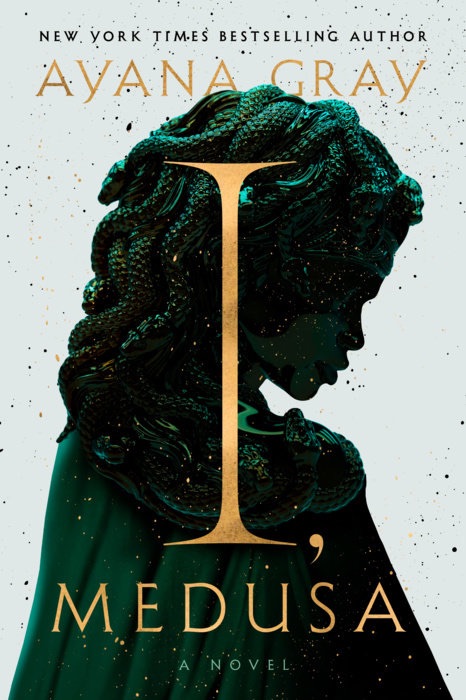
My latest recent read was I, Medusa by historical fantasy author Ayana Gray.
Review
I, Medusa is a reimagining of one of Greek mythology’s most infamous and misunderstood figures: Medusa. Gray transforms the tale of Medusa into a “coming-of-age” exploration of identity, power and betrayal with Medusa a pawn at the hands of Olympian gods. There are also themes of racism and inequality, femininity, and personal agency where Gray gives Medusa the opportunity to be a figure with mortal sentiments and tell her own account of how she became an infamous monster of Greek mythology.
Gray delivers a an emotionally charged retelling of Medusa, transforming the monster into a young woman with hopes, fears, relationships, and ambitions of her own. Instead of the familiar tale beginning with the Medusa as a monster Gray takes develops a character, the girl who existed before a transformation of punishment by the Olympians and Medusa became the monster we know.
“Meddy ” as a naive and young woman is an engaging protagonist and her journey from a sheltered existence to a woman who confronts the Olympian gods who have shaped her is the “coming of age” part of the novel. Her close relationships with her sisters is the backbone of the story.
The mythology is vividly reimagined with Olympian and older Greek given a fresh take and a world that is recognisable while still offering plenty of new discoveries.
Gray portrays Medusa in a world where sexual violence, prejudice, manipulation and the inequalities between men and women form the basis of Medusa’s trnansformarkkn from disillusioned “Meddy” to rage and revenge seeking Medusa. This is an effective tool where female justice is found in reclaiming personal agency.
The pacing of the novel is focused heavily on Meddy’s journey and how Medusa came to be rather than a equality between the two. I found this ending where the focus is now on Medusa and her sisters was rushed and felt disconnected from the remainder of the novel. Nevertheless, the emotional impact of Meddy’s journey remains strong and the focus on the woman she is destined to become is a dark promise toward the end.
Conclusion
I, Medusa is a strong and emotional reimagining of Greek mythology allowing Medusa to have her own voice and history. Ayana Gray combines mythology and fantasy in “coming-of-age” story exploring identity, injustices and revenge.
A great read for those who enjoy Greek mythology retellings, feminist reinterpretations, and stories that challenge a the status quo. I, Medusa offers a fresh and thought-provoking take on one of mythology’s most enduring figures.
** This is my personal opinion and does not reflect any judging decisions **

